Tiny Gardens Everywhere: The Past, Present and Future of the Self-Provisioning City
Kate Brown
Join us for a special International Book Club featuring Tiny Gardens Everywhere with author and professor Kate Brown. This event is also part of Earth Fest at UW–Madison.
Gardeners in cities and suburbs are reclaiming lost commons, transforming vacant lots into vibrant plots, turning waste into compost, and recreating what was once the most productive agriculture in recorded human history while simultaneously nurturing health, hope, and community. Join us to learn more from Kate Brown, Thomas M. Siebel Distinguished Professor in History of Science at Massachusetts Institute of Technology, about this fascinating environmental history!
Register for a chance to receive one of 20 free copies of Tiny Gardens Everywhere!
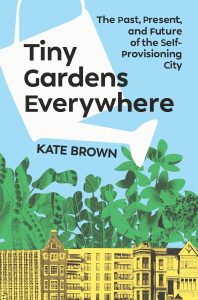 From the eighteenth century to the twenty–first, the surprising history and inspiring contemporary panorama of urban gardening: nurturing health, hope, and community.
This manifesto for the next food revolution by acclaimed environmental historian Kate Brown speaks to nature lovers, food activists, social–justice warriors, urban planners, WOOFers, and the climate–concerned.
Ever since wage labor in cities replaced self–provisioning in the countryside, gardeners have reclaimed lost commons on urban lots. They composted garbage into topsoil, creating the most productive agriculture in recorded human history, without use of fossil fuels. The ecological diversity they fostered made room for human difference and built prosperity, too: in Nazi Berlin, working–class gardeners harbored dissidents and Jews; in Washington, DC, Black southern migrants built communities around gardens and orchards, the produce funding homeownership.
Grafting contemporary experience and concerns onto every historical chapter, Kate Brown creates a mesmerizing hybrid past and present, archive and experience, showing how down–to–earth gardeners can reap abundant harvests while fostering mutual aid and political engagement.
Tiny Gardens Everywhere: The Past, Present and Future of the Self-Provisioning City
From the eighteenth century to the twenty–first, the surprising history and inspiring contemporary panorama of urban gardening: nurturing health, hope, and community.
This manifesto for the next food revolution by acclaimed environmental historian Kate Brown speaks to nature lovers, food activists, social–justice warriors, urban planners, WOOFers, and the climate–concerned.
Ever since wage labor in cities replaced self–provisioning in the countryside, gardeners have reclaimed lost commons on urban lots. They composted garbage into topsoil, creating the most productive agriculture in recorded human history, without use of fossil fuels. The ecological diversity they fostered made room for human difference and built prosperity, too: in Nazi Berlin, working–class gardeners harbored dissidents and Jews; in Washington, DC, Black southern migrants built communities around gardens and orchards, the produce funding homeownership.
Grafting contemporary experience and concerns onto every historical chapter, Kate Brown creates a mesmerizing hybrid past and present, archive and experience, showing how down–to–earth gardeners can reap abundant harvests while fostering mutual aid and political engagement.