Solito: Childhood Migration and the Power of Personal Narrative
M. Isabel Martín Sánchez
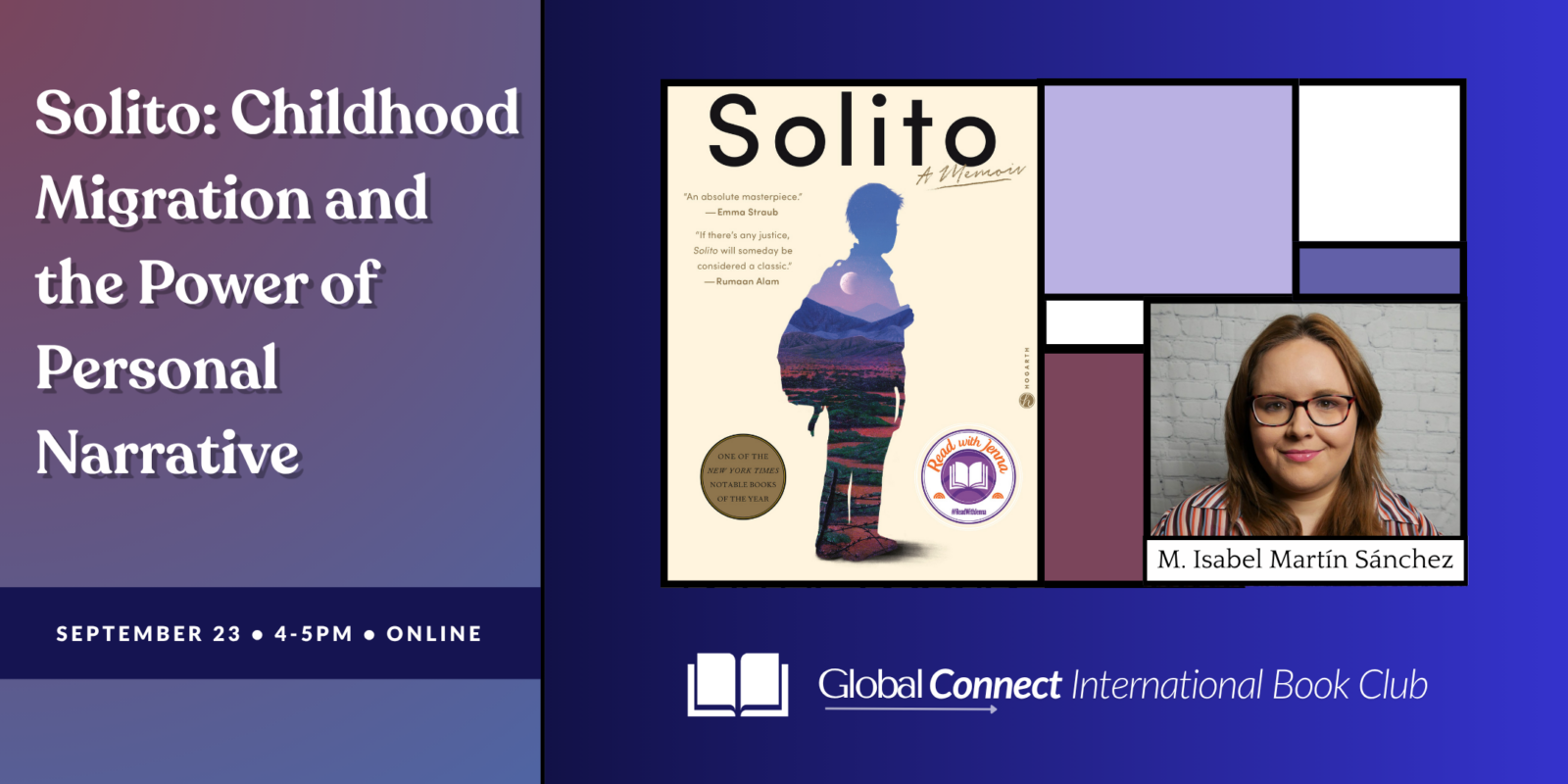
In this powerful memoir, poet Javier Zamora recounts his journey from El Salvador to the United States at just nine years old. Traveling thousands of miles through Guatemala and Mexico with a group of strangers and a hired guide, Javier faces extraordinary hardship while holding onto the hope of reuniting with his parents. Both heartbreaking and deeply hopeful, Solito is a moving story of migration, resilience, and the unexpected kindness found along the way.
Join IRIS Global Connect and the Latin American, Caribbean, and Iberian Studies Program (LACIS) for a virtual educator book club featuring Isabel Martín Sánchez. Drawing on her work related to borders, migration, power, violence, and the arts, Martín Sánchez will help us explore the personal and broader contexts surrounding Solito. The program will also consider opportunities and challenges involved in teaching the memoir, including ways educators might approach its themes, and representations of unaccompanied child migration.
The first 30 educators to register will receive a free copy of the book!
Participants are encouraged to read Solito ahead of of this event, though it is not required.
This free, online event is open to all and especially designed for K–12 educators seeking resources and perspectives for teaching about global migration, refugees, and the human experience behind the headlines.
About M. Isabel Martín Sánchez
M. Isabel Martín Sánchez holds a Ph.D. in Spanish Literature from the University of Wisconsin–Madison. Born in Madrid, Spain, she studied communication and international relations before moving to the United States. She began her career as a journalist, reporting on Spanish politics and democracy, and has since taught a variety of courses at the University of Wisconsin–Madison and the University of Wyoming. She is a bilingual (English-Spanish) researcher, communications professional, and educator with more than a decade of classroom experience. Her research specializes in political violence, migration, and artivism, focusing on the performativity of the Mexico-U.S. border and the dynamics of power and care. Her publications have appeared, among others, in Latin American Theatre Review, and she is the author of Teaching Lost Children Archive in Wisconsin: A Guide for Educators (UW–Madison Center for the Humanities). Beyond her academic work, Isabel has a longstanding passion for theater. She has acted in university productions and co-directed the play Ruido (2025) with Décimo Piso, UW–Madison’s Hispanic theater group.
About Solito
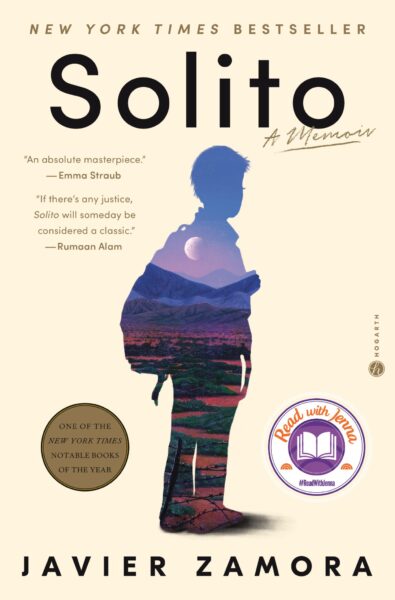
Trip. My parents started using that word about a year ago—“one day, you’ll take a trip to be with us. Like an adventure.”
Javier’s adventure is a three-thousand-mile journey from his small town in El Salvador, through Guatemala and Mexico, and across the U.S. border. He will leave behind his beloved aunt and grandparents to reunite with a mother who left four years ago and a father he barely remembers. Traveling alone except for a group of strangers and a “coyote” hired to lead them to safety, Javier’s trip is supposed to last two short weeks.
At nine years old, all Javier can imagine is rushing into his parents’ arms, snuggling in bed between them, and living under the same roof again. He cannot foresee the perilous boat trips, relentless desert treks, pointed guns, arrests and deceptions that await him; nor can he know that those two weeks will expand into two life-altering months alongside a group of strangers who will come to encircle him like an unexpected family.
A memoir as gripping as it is moving, Solito not only provides an immediate and intimate account of a treacherous and near-impossible journey, but also the miraculous kindness and love delivered at the most unexpected moments. Solito is Javier’s story, but it’s also the story of millions of others who had no choice but to leave home. (Source: author’s website)
This event is co-sponsored with the Latin American, Caribbean, and Iberian Studies Program at UW–Madison.